
OEM gems and jewelry manufacturer
With the rapid development of the domestic market for collecting mineral specimens, many gem minerals have begun to enter the domestic market. Today, I would like to introduce to you a relatively rare mineral variety – molybdenum lead ore.
What is molybdenum lead ore?
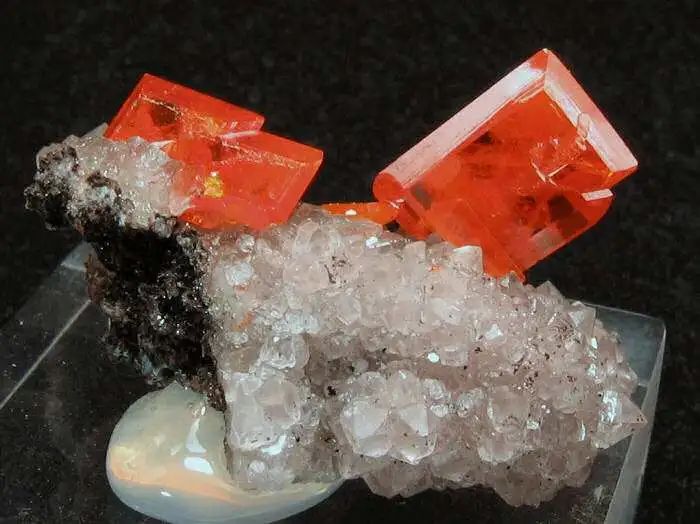
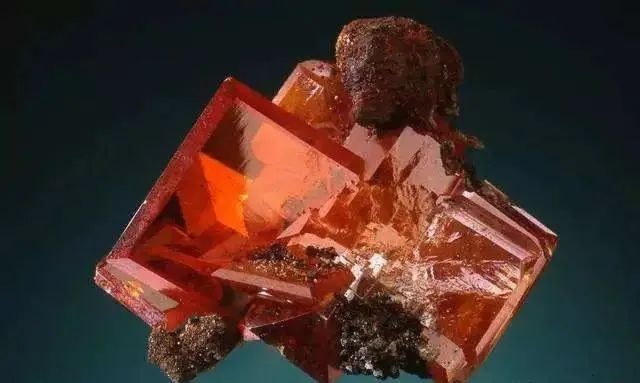
Molybdenum lead ore serves as both an important source of molybdenum and a commonly found molybdenum-bearing mineral. As a lead molybdate with the chemical formula PbMoO₄, it typically forms in the oxidation zones of lead and molybdenum deposits. The mineral often develops into thin, plate-like crystals with vibrant shades of red, orange, yellow, or brown. With its transparent to semi-transparent appearance, it is also known as “yellow lead ore” or “colored molybdenum lead ore” among collectors and geologists.

Naming of Molybdenum Lead Mine
This mineral was first discovered by Austrian mineralogist F.X. Wulfen in Bart Blayberg, Kerdon, Austria, and was later named wulfenite after him, which translates to molybdenite in Chinese.
Gemological Information
Molybdenum lead ore is really fragile, its Mohs hardness is only 2.5-3. This also means that it is only slightly harder than fingernails, which is very difficult to process and can be damaged if not paid attention to.
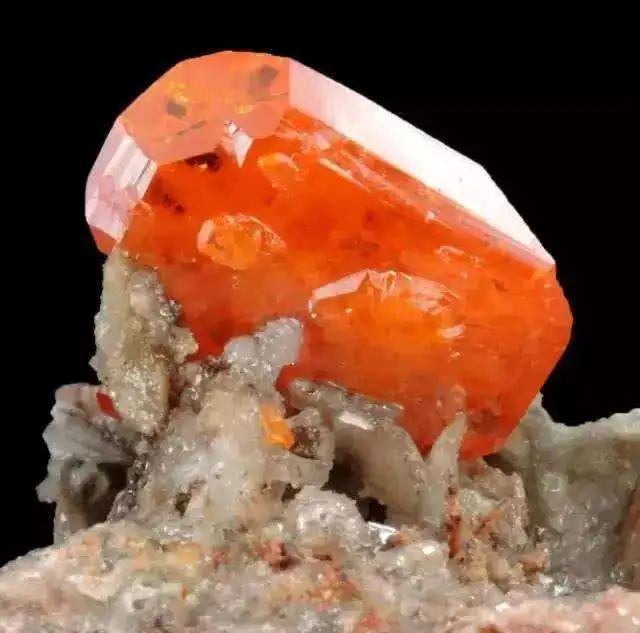
Molybdenum lead ore rarely enters the jewelry market, typically appearing in museum displays or private collections. A striking example comes from Chumeibu, Namibia—a 21.5-carat gemstone-cut specimen that the American Gemological Academy holds in its collection. This dazzling piece captures attention with its intense brilliance. However, due to its fragility, it remains a gem to admire rather than wear, leaving gemstone enthusiasts with a sense of wonder—and a hint of regret.
Metal of War
Molybdenum lead ore contains not only lead but also the valuable metal molybdenum. As a rare metal, molybdenum appears in low concentrations and spreads widely throughout the Earth’s crust. It doesn’t exist in its pure elemental form; instead, it usually forms compounds. The most common examples include molybdenite (MoS₂), where molybdenum bonds with sulfur, and molybdenum lead ore (PbMoO₄), where it combines with lead.
Molybdenum is a silver-white metal valued for its exceptional hardness and extremely high melting point of 2623 °C, ranking sixth among all natural elements after carbon, tungsten, rhenium, osmium, and tantalum. When alloyed with steel, molybdenum significantly boosts corrosion resistance, improves thermal conductivity, and reduces thermal expansion. These enhancements allow molybdenum alloys to retain their strength at high temperatures, making them ideal for aerospace, military, and other high-performance engineering applications.
With these outstanding properties, molybdenum plays a vital role in alloy manufacturing, especially in demanding industries such as aerospace, aviation, automotive, and precision machinery. Its crucial function in military technology has earned it the nickname “war metal,” reflecting its strategic importance in defense systems and advanced weapon development.
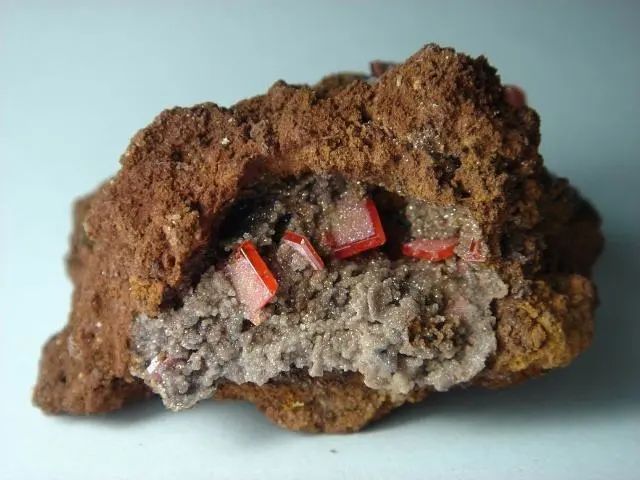
Properties of Molybdenum Lead Ore Materials
Crystal system: tetragonal crystal system, tetragonal biconical crystal class.
Crystal habits: plate-like and thin plate-like crystals, with a few cone-shaped and columnar crystals, and common single crystals. Aggregated granular.
Colors: There are various yellow, orange red, gray, brown, etc
Gloss: Diamond luster, fracture oil luster.
Transparency: Transparent to semi transparent.
Cleavage: cleavage complete, moderate, incomplete
Mohs hardness 2.5-3
Specific gravity 6.5-7,
Refractive index: uniaxial crystal Ne=2.304, No=2.402
Double reflectance=0.0980.
Photoactivity: Negative photoactivity of uniaxial crystals.
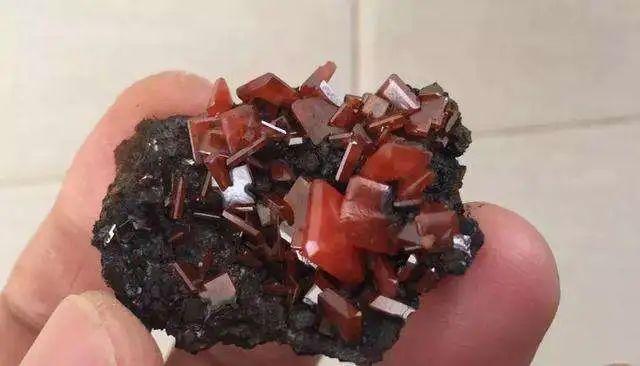
Molybdenum lead ore and scheelite
Geologists found that calcium (Ca) can partially replace lead (Pb) in molybdenum lead ore, while tungsten (W) can substitute for molybdenum (Mo). This substitution gives the mineral a crystal structure very similar to scheelite (CaWO₄). However, molybdenum lead ore usually forms thinner and flatter crystals. Collectors who admire scheelite for its strong fire color often find molybdenum lead ore even more brilliant. Thanks to its high refractive index (2.283–2.405) and chromaticity (0.203), well-cut transparent specimens can exhibit a stunning diamond-like fire effect, making them highly prized among mineral and gem enthusiasts.
Combination with stamps
Around the world, many postal departments actively celebrate molybdenum lead ore by featuring it on commemorative stamps. According to available data, over 30 countries have already issued stamps centered on this rare and striking mineral. For example, in 2015, the Republic of Djibouti in northeastern Africa released a stamp that showcased vivid molybdenum lead ore crystals, assigning it a face value of 300 Djibouti francs. As a result, this release quickly caught the eye of both stamp collectors and mineral enthusiasts worldwide.
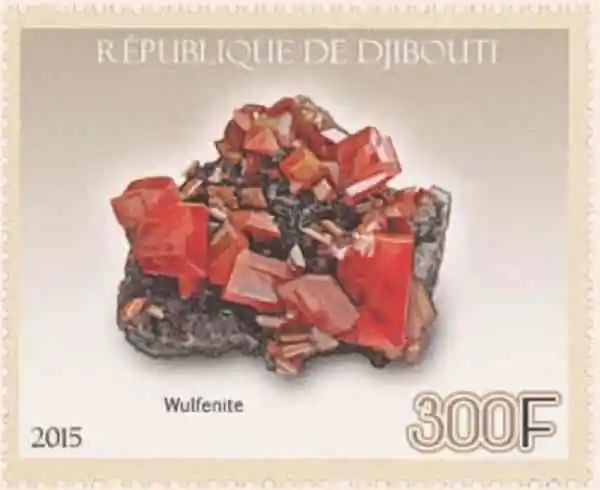
Molybdenum and lead ore stamps issued by the Republic of Djibouti in 2015
The origin of molybdenum lead ore
Molybdenum lead ores from different regions display distinct features. For instance, the Red Cloud Mine in Arizona, USA yields specimens with a rich red hue, while those from Mexico often show a vibrant orange tone. Meanwhile, Slovenian samples typically appear yellow. Thanks to these bright colors and well-formed crystals, many artists and gem cutters draw inspiration from them. In addition, notable deposits occur in Hunan and Yunnan (China), Colorado (USA), Mexico, and Chile. Most of these sites contain small to medium-sized molybdenum deposits, with each region offering variations in scale and mineral quality.
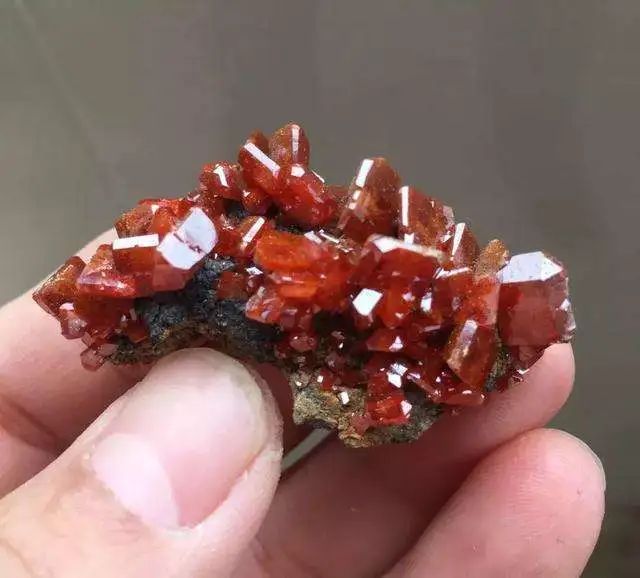
Geological genesis and occurrence of molybdenum lead ore
Molybdenum lead ore often appears alongside minerals such as quartz, calcite, vanadinite, crocoite, cerussite, and pyromorphite. Typically, it forms as a secondary mineral within the oxidation zones of lead-zinc deposits. These zones, in turn, usually develop in areas rich in lead-zinc reserves. In particular, dry desert climates provide favorable conditions for their formation. In addition to Arizona in the United States, significant deposits also occur in the desert regions of Mexico, Namibia, Iran, Australia, and Morocco. As a result, these regions have become important sources of molybdenum lead ore worldwide.